Hoarding Cleanup in Waukegan and Lake County, IL: What We Do and What We Don't
Here's the plain version. Lakefront Junk Removal is a junk hauling crew. On a hoarding cleanup, we carry out the things you've decided to part with, load them, sweep up and haul them away. That's the job.
We are not a biohazard company and we are not a cleaning company. We don't sanitize, deep clean, treat mold or pests, or clean up human or animal waste, needles or other medical waste. If a home has those problems, a biohazard remediation company needs to handle that part, and usually before we come in. Tell us what's there when you reach out. We'll say honestly which parts are ours and which aren't.
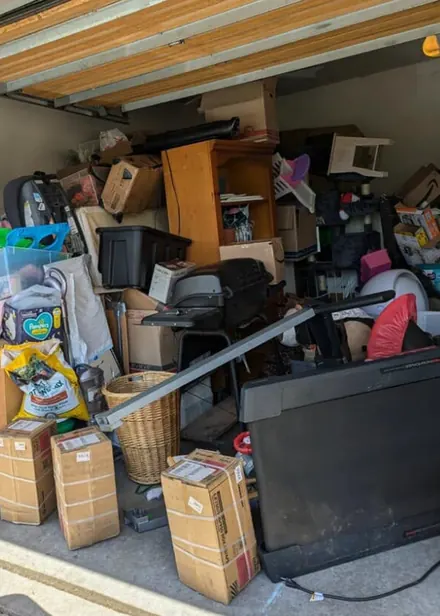
Plenty of full homes have none of that. They have too many newspapers, boxes, clothes, bags and pieces of furniture, and not enough floor. That's hauling, and hauling is what we do.
Who Decides What Stays and What Goes
The person who lives there decides. Not the crew, and not the relative who made the call, unless it's truly their call to make. We don't sort someone's belongings into trash on our own judgment. We ask, or we follow the rules you set before the first box moves.
The rules can be simple. One color of tape means keep. One room is for maybe. Everything unmarked in the rooms you named goes. If the person whose home it is hasn't agreed to the cleanout, the job tends to stall at the front door, and it isn't ours to force. Have that conversation first.
If you're arranging this for a parent, a sibling or a tenant, tell us who has the final say on site. The crew will take direction from that one person so nobody gets contradicting instructions.
How a Hoarded Home Gets Cleared: Paths First, Then Rooms
The carry-out on a packed house runs in a set order. Safety and space both demand it.
- Start at the door. The entry, the hallway and the stairs get cleared first so there's a safe way in and out.
- Open a staging spot. One patch of clear floor near the exit, where keep and go can be separated.
- Work one room at a time, from the doorway inward. Half-clearing five rooms just moves the piles around.
- Go top down. Stacks come apart from the top so nothing slides or tips onto anyone.
- Bag and box the loose stuff. Loose paper and small items get contained so they can be carried, and so anything valuable gets seen on the way.
- Heavy pieces last. Once there's a path, the couch, the freezer and the mattresses can come out without anyone climbing over a pile.
What Makes a Hoarding Cleanout Harder Than a Regular Junk Pickup
On a normal pickup, the junk is in one spot and the path to the door is open. In a very full home, neither is true. There may be no clear floor to set a dolly on. Doors may only open partway. Stairs may be lined with boxes on both sides. The crew has to build its own working room before the real loading starts.
Weight is the other surprise. Paper is heavy. Years of magazines, mail and books in a single room can outweigh the furniture. We don't charge a weight fee, but it's why stacks get broken down into boxes instead of carried as armloads.
Stairs, basements and attics are normal for us and add nothing to the bill. If a floor feels soft, or a stack is leaning on something it shouldn't be, the crew stops and tells you before going further.
Paperwork, Photos and Valuables Worth Finding Before They Leave
Packed homes hide important things inside ordinary piles. Before work starts, tell the crew what's missing or what might be in there. They'll watch for it and set it aside.
- Cash, checkbooks, bank cards and uncashed checks
- Deeds, car titles, wills, tax papers and birth certificates
- Photos, letters and anything handwritten
- Keys, including car keys and safe deposit keys
- Jewelry, watches and coin collections
- Medications, which get set aside for you to deal with
- Ammunition, which we can't haul and which you'll want to know about
What a Junk Crew Can Haul From a Hoarded House, Room by Room
Some homes are full in just one zone. If it's mainly the lower level, a basement junk cleanout may be all you need. If the cars have been parked outside for years, look at clearing out a packed garage as a first step.
| Area | What usually comes out | Worth knowing |
|---|---|---|
| Living room and bedrooms | Furniture, mattresses, box springs, clothing, boxes and bags | Check drawers and pockets first if you can |
| Kitchen | Small appliances, cookware, dishes, the old fridge or range | Fridges and freezers need refrigerant recovered before scrapping |
| Basement and attic | Stored boxes, holiday items, shelving, exercise equipment | Stairs are normal work with no added fee |
| Garage and yard | Tools, bikes, scrap metal, brush, old sheds | Paint, oil, gasoline and propane stay behind |
| Den or home office | Paper, books, TVs, computers and other electronics | Electronics go to an electronics recycler |
One Big Day or Several Smaller Visits
Some people want it done in one push. Others can only part with so much in a day, and that's a reasonable way to do it. The work can be split by room or by floor, with each visit quoted and approved before it starts. Nothing gets loaded that you haven't signed off on.
Going in stages has a real upside. The first cleared room shows what the house can be, and it gives you a place to sort the next one. The kitchen, the bathroom and the path to the bed are good places to begin, since those are the spots a person needs every day.
Pricing a Hoarding Cleanup by Truck Space
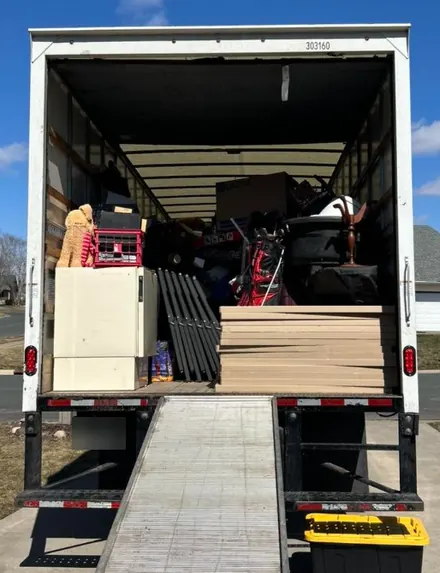
The price is based on volume, meaning how much truck space the load fills, from a quarter truck up to a full one, with half and three-quarters in between. A full house can take more than one truck, and the quote will say so. Labor, loading, sweep-up and disposal are included. You won't see an hourly rate, a stairs fee, a weight fee or a fuel surcharge. The volume pricing breakdown has the details.
Photos work for a single room. For a whole home, we'd rather come see it. The on-site look is free and takes about 15 minutes. You get one flat number, and work doesn't start until you approve it.
Nobody needs to tidy up before the photo or the visit. Seeing it as it is gets you an accurate price.
Hoarding Junk Removal Across Lake County, IL and Southeast Wisconsin
We work out of Waukegan and cover every town in Lake County with no extra charge for distance. That includes the Chain O'Lakes side of the county, where a cleanout in Ingleside might be an older lake cottage with a small crawl space and a shed that both filled up over the years.
Bigger houses hide it better and hold more. On the southwest end of the county, junk hauling in Kildeer often means large homes with full basements and big garages, so plan on the on-site look instead of photos.
In Wisconsin we cover Kenosha County and Racine County, including hoarding cleanouts in Paddock Lake. For Wisconsin addresses, the price is confirmed by text before the truck leaves.
What Can't Go, Where the Rest Ends Up, and How to Start
A few things can't ride with us: wet paint, solvents, motor oil, gasoline, propane tanks, asbestos, ammunition and medical waste. Lake County, IL residents can take paint, oil and household chemicals to SWALCO's household chemical waste collection. Wisconsin residents should use their county's household hazardous waste collection.
What we do take gets sorted. Usable items go to donation, which matters to people letting go of things they saved for a reason. Metal goes to scrap recycling, electronics to an electronics recycler, and the rest to a licensed transfer station.
You don't have to explain how the house got this way. Text a photo or two to (224) 944-8652, or write to us here if you'd rather not talk on the phone. Say which rooms, who decides, and whether anything in the home falls outside what a hauler can handle. We're open Monday through Saturday, 7am to 7pm, and Sunday by appointment.