Storage Unit Cleanouts in Waukegan and Lake County, IL: What the Job Is
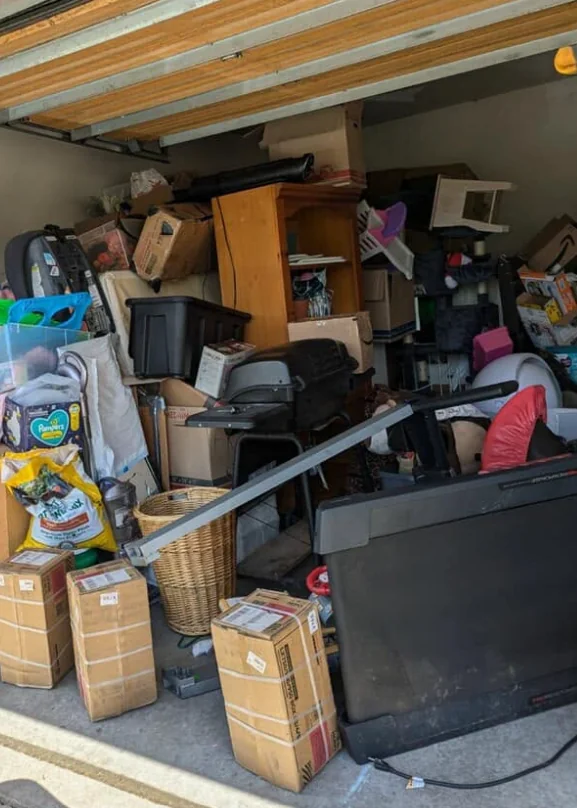
A storage unit cleanout is simple on paper. Everything in the unit comes out, goes on the truck, and the floor gets swept. What makes it a real job is how units get packed. The sleeper sofa went in first, standing on end. Then years of boxes got stacked in front of it. Nobody remembers what's in the back corner.
Lakefront Junk Removal is based in Waukegan and runs storage unit cleanouts all over Lake County, IL, plus Kenosha County and Racine County across the Wisconsin line. You text a photo, you get one flat price, you pick a slot, and the crew does the carrying. You don't rent a truck. You don't borrow a dolly. You don't burn a Saturday driving loads to the dump.
Before the Truck Comes: Storage Facility Details to Sort Out
Most of what slows a unit cleanout down has nothing to do with the junk. It's the gate, the lock and the office. Square these away first and the crew can pull up and start.
- Gate code and gate hours. Most facilities lock the gate at night, and office hours are often shorter than gate hours. Check both before you pick a slot.
- The lock. Send the combination, meet the crew with the key, or ask the office if they'll hold a key for you. If the key is long gone, ask the facility how they handle cutting a lock. Don't assume we can cut it.
- Unit number and location. Building letter, floor, and which door or elevator is closest.
- Move-out notice. Many facilities want notice before you vacate, and rent usually runs by the month. Ask the office which date keeps you from paying for another one.
- The dumpster rule. Almost every storage place bans tenants from using its dumpster. Plan on nothing staying on the property.
- What the office checks at the end. Usually an empty, swept unit with your lock off the door.
How the Carry-Out Works on Drive-Up, Indoor and Upper-Floor Units
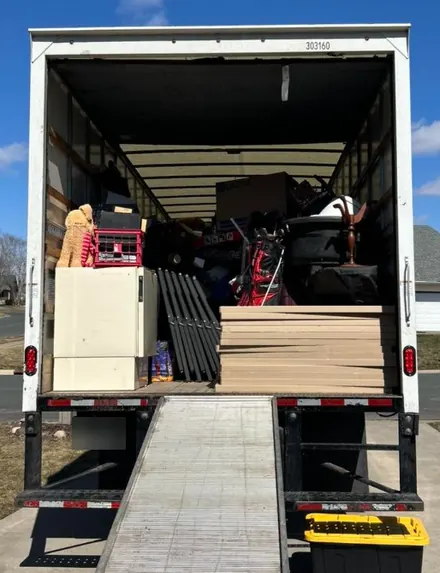
A drive-up unit is the easy one. The truck backs up to the roll-up door and the walk is a few steps. The crew works front to back, because that's the only way a packed unit lets anybody work. The front wall of boxes comes out first. Then the furniture behind it. Then whatever got shoved against the back wall.
Indoor and climate-controlled units take longer. Everything rides a cart down a hallway, and on upper floors it waits on an elevator too. That's normal work for us and it doesn't change what you pay. There's no stairs fee and no hourly rate. The price follows how much truck space your stuff fills, not how far it had to roll.
| Unit type | How it comes out | What helps |
|---|---|---|
| Drive-up, ground level | Truck backs to the door, short carry | Send the building letter and unit number |
| Indoor, ground floor | Carts down the hallway to the loading door | Tell us which entrance is closest to the unit |
| Upper floor with elevator | Carts to the elevator, then out the loading door | Ask the office about elevator rules and hours |
What We Haul Out of Storage Units
Storage units collect the same things everywhere, because a unit is where stuff goes when nobody can decide on it. We take nearly all of it.
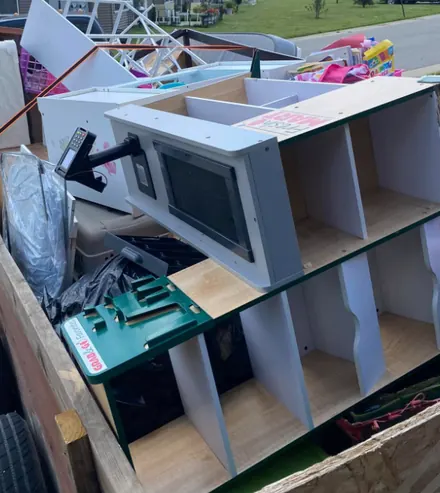
- Couches, sleeper sofas, recliners, dressers, dining sets and bed frames
- Mattresses and box springs
- Fridges, chest freezers, washers, dryers and ranges
- TVs, computers, monitors and stereo gear
- Boxes of household goods, clothes, books and holiday decorations
- Treadmills, weight benches and bikes
- Desks, filing cabinets and metal shelving
- Tools, lawn equipment and scrap metal
Clearing a Unit You Inherited or Haven't Opened in Years
Some units land in your lap. A parent moves into a smaller place or passes away, and you end up with a key, a monthly bill and no idea what's inside. That's a different job than emptying your own unit, because somebody has to look before it all goes.
Our advice is to walk it once before you book. Pull the things that can't be replaced: photo albums, tax records, deeds and titles, jewelry boxes, anything with a name on it. Put them in your car. Then tell us everything left is going. If the unit is one piece of a bigger job, our estate cleanout service covers the house, the garage and the unit together.
If you can't get there in person, say so when you text. You don't have to be on site. Tell us what to watch for and the crew will set it aside.
Storage Unit Cleanout Pricing: Truck Space, Not Unit Size
You're charged by volume. In plain terms, that's the share of the truck your stuff takes up: a quarter, a half, three-quarters or a full truck. Labor, loading, the sweep-up and disposal are all inside that one number. There's no hourly rate, no fuel surcharge, no stairs fee and no weight fee.
The size on your lease doesn't set the price. A big unit with six pieces of furniture in it is a small load. A small unit stacked to the ceiling is not. That's why the photo matters. Roll the door all the way up, step back and get the whole opening in the frame. Take one more from an angle if you can see how deep the stacks go. Our pricing page explains how the truck fractions work, and you approve the price before anything gets lifted.
If a unit is packed too tight to see past the front row, we'll come do a free on-site look. Figure about 15 minutes. A unit that's full to the ceiling can take more than one truckload, and the quote will say so up front.
To get your number, text the photo to (224) 944-8652 with the facility name, the unit number and the date you need to be out. You can also send us a message with the same details. Hours are Monday through Saturday, 7am to 7pm, with Sunday by appointment. A same-day or next-day slot is often available.
What Can't Go on the Truck, and Where It Goes Instead
Units are where old paint and garage chemicals end up. We can't take wet paint, solvents, motor oil, gasoline, propane tanks, asbestos, ammunition or medical waste. If the crew finds some in the back, they'll pull it to the front and tell you. It can't stay in the unit, so plan on picking it up. The rest of the unit still gets emptied.
Lake County, IL residents can take paint, oil and household chemicals to SWALCO, the Solid Waste Agency of Lake County, which runs household chemical waste collection. If you live in Wisconsin, check your county's household hazardous waste collection. A mower or snowblower can go on the truck, but tell us if there's still gas in the tank.
Storage Unit Junk Removal Near You: Lake County and Southeast Wisconsin
We're in Waukegan, so units in town and right next door are the shortest trip we make. That includes storage unit junk removal in Park City, which sits between Waukegan and Gurnee.
Head west and the county turns into lake towns and open road. We run cleanouts out in Volo, near where Route 12 meets Route 120, and there's no extra charge for distance anywhere inside Lake County.
North of the state line, we handle storage cleanouts in Kenosha and the rest of Kenosha County and Racine County. For Wisconsin jobs the price is confirmed by text before the truck leaves, so you know the number before we're on the road.
After the Unit Is Empty: Donation, Recycling and Disposal
Loads get sorted after pickup. Usable furniture and household goods go to donation. Metal heads to the scrap recycler. TVs, computers and other electronics go to an electronics recycler, since Illinois and Wisconsin both ban them from landfills. Fridges and freezers need the refrigerant recovered before they're scrapped. Whatever remains ends up at a licensed transfer station.
If the unit is mostly couches, dressers and bed frames, it's really a furniture haul-away job with some boxes on top, and a good share of it may be fit to donate.
Before the crew leaves, the floor gets swept. That matters more here than on most jobs. A swept, empty unit is what the office looks for before it closes your account.
Mistakes That Cost People an Extra Month of Storage Rent
Nearly all of these come down to timing.
- Booking the cleanout for the last day of the month with no cushion. Give yourself a few days.
- Not checking the gate code, or forgetting the office closes before the gate does.
- Leaving your lock on the door after the unit is empty. Many facilities treat a locked unit as an occupied one.
- Planning to sort it all yourself first, then paying rent for three more months while that doesn't happen.
- Renting a truck for a dump run, then learning the TVs can't go to a landfill at all.